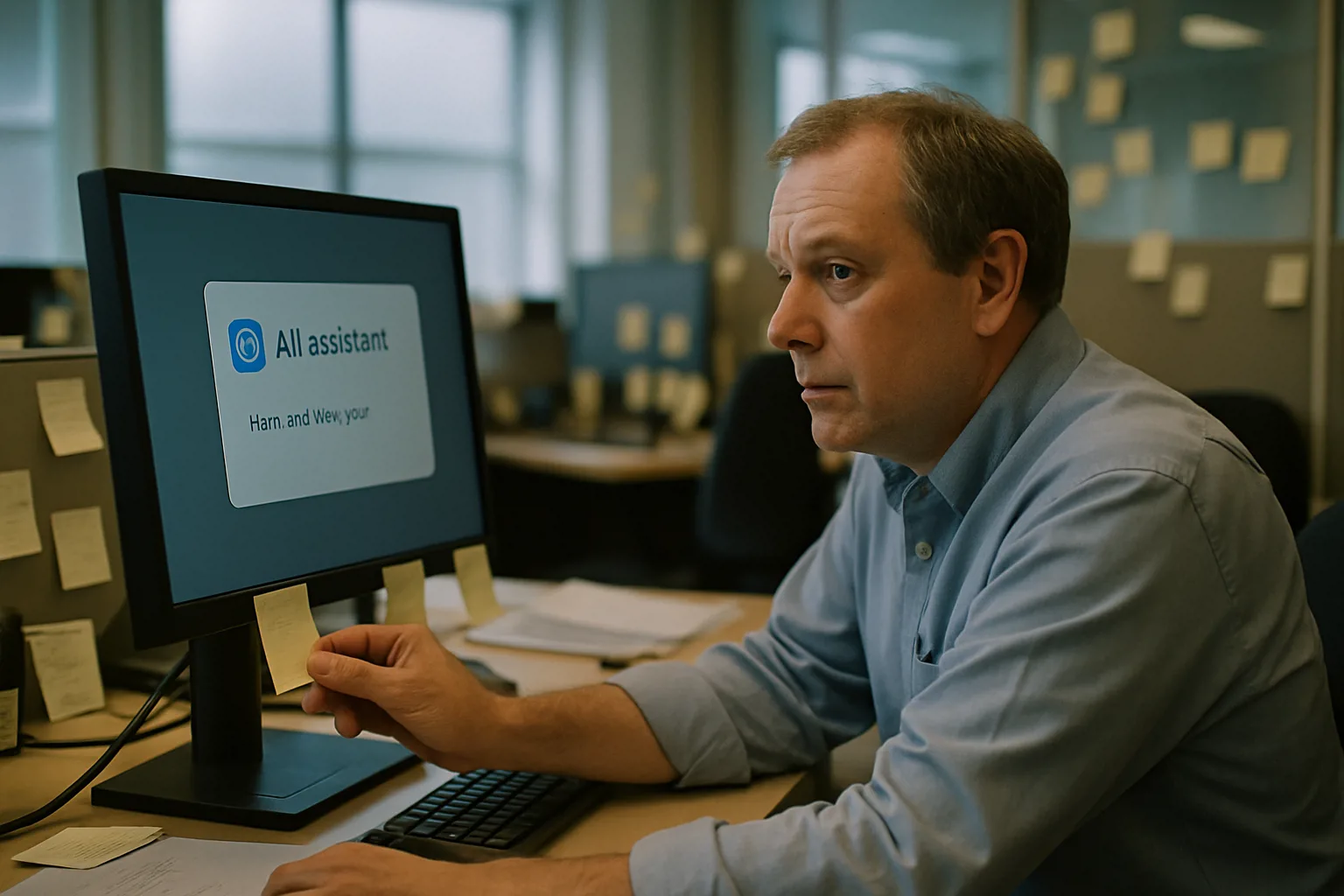
Despite the tech industry's enthusiasm, many consumers are wary of increased AI integration, preferring enhancements to existing tasks over disruptive changes.
- Consumers prefer AI that enhances rather than replaces tasks.
- User resistance is tied to concerns about workflow disruption.
- There is a growing demand for human oversight in AI decisions.
- AI adoption in workplaces faces significant hesitancy.
- Businesses benefit by focusing on seamless AI integrations.
Artificial intelligence (AI) is often heralded as the future of technology, promising to revolutionize everything from daily chores to complex business operations. However, for many consumers, the prospect of more AI in their lives is met with caution and skepticism. Rather than craving new AI features, people are increasingly wary of the disruptions these technologies might bring.
The Myth of Consumer Demand for AI
The tech industry frequently assumes that consumers are eager for AI innovations. Yet, a closer examination reveals a different picture. Many users perceive AI features as intrusive, often requiring them to adjust entrenched workflows. This resistance is not just about reluctance to change; it stems from concerns about the reliability of AI and the additional effort needed to manage AI-generated outputs.
Disruptive vs. Enhancing Technologies
Consumers show a clear preference for AI that augments rather than replaces human effort. Technologies that automate mundane tasks are welcomed, whereas those that attempt to overhaul existing processes or replace human roles are met with skepticism. This preference highlights a broader trend: users are comfortable with AI that works quietly in the background, enhancing their lives without demanding radical changes.
Integration Challenges in AI Adoption
For AI to be successful in the consumer market, it must integrate seamlessly into existing workflows and mental models. This seamless integration minimizes the need for additional tools or significant behavioral changes, making the technology more attractive to users.
- Compatibility: AI solutions should work with existing systems without requiring major upgrades.
- Usability: Interfaces and outputs should be intuitive and easy to manage.
- Reliability: Users need assurance that AI will perform consistently and accurately.
"The key to successful AI adoption lies in its ability to fit naturally into users' lives without demanding undue changes."
Public Skepticism and Demand for Oversight
Public perception of AI is still dominated by concerns about its potential impact. According to a Pew Research Center survey, many people worry about job displacement and the erosion of human skills. These concerns contribute to a significant demand for human oversight in AI decision-making processes. A study published in October 2025 noted an increase in the proportion of respondents who find AI "not acceptable at all," rising from 23% to 30%.
The Need for Human Touch
As AI technologies become more sophisticated, the call for human oversight grows louder. People want assurances that there is a human in the loop, particularly in decision-making processes that significantly affect lives and livelihoods.
The Workplace Transformation Paradox
While AI promises to enhance productivity and innovation, its adoption in workplaces is hampered by what Microsoft describes as a "Transformation Paradox". This paradox indicates that despite recognizing the potential benefits of AI, many companies and employees prefer to focus on current goals rather than pursue uncertain AI-driven innovations.
| AI Adoption Factor | Public Sentiment |
|---|---|
| Job Displacement | High Concern |
| Workflow Disruption | Moderate Concern |
| Human Oversight | High Demand |
How Businesses Can Benefit by Aligning with Consumer Preferences
For businesses, the path to successful AI adoption does not lie in overwhelming users with new features. Instead, companies should focus on developing AI solutions that enhance existing tasks and integrate smoothly into users' lives. By addressing specific needs without imposing additional burdens, businesses can foster a more welcoming environment for AI technologies.
In conclusion, understanding and respecting consumer preferences is crucial for leveraging AI effectively. Companies that prioritize user-friendly, enhancement-focused AI solutions will be better positioned to succeed in an increasingly AI-conscious market.
Frequently Asked Questions
Why are people resistant to AI integration?
People are resistant because they perceive AI as intrusive, disrupting their workflows and raising concerns about reliability and control.
What type of AI do consumers prefer?
Consumers prefer AI that enhances existing tasks, such as automating mundane activities, rather than replacing human roles.
Sources
- No, People Don’t Want More AI In Their Life — Smashing Magazine
- What the data says about Americans’ views of artificial intelligence | Pew Research Center
- Reduced AI Acceptance After the Generative AI Boom: Evidence From a Two-Wave Survey Study
- Microsoft says 'Transformation Paradox' holding back AI adoption in the workplace - 45% of respondents say it's safer to focus on current goals, rather than AI innovation